
Folk Fiddler
Frederick Calnan
1876–1943
Folk Fiddler
1876–1943
"When Sarah played, the fiddle didn't just sing — it told you the story of where you came from."
A Life in Music
Sarah O’Malley grew up in the rolling farmland outside Ottawa, where folk music was as much a part of daily life as the changing seasons. She first picked up a fiddle at the age of seven, borrowing her grandfather’s weathered instrument, and by twelve she was already playing at local ceilidhs and harvest dances. By the mid-1960s, she had become the most sought-after fiddler in the Ottawa Valley, known for her spirited reels and hauntingly tender slow airs.
The community halls and church basements of the Valley became her stage, and the families who gathered there became her audience. Week after week, Sarah honed her craft, learning to feel the pulse of a room and draw every foot to the floor. Her bow carried a fire that could light up a barn dance, yet possessed a softness that could hush an entire hall into reverent silence.
Her grandfather, Paddy O’Malley, had emigrated from County Clare with little more than his fiddle and a headful of tunes. He passed both to Sarah — along with a belief that music was never meant to be performed for an audience so much as shared among neighbours. That philosophy shaped every note she played. Whether the crowd numbered eight or eight hundred, Sarah played as though she were sitting in her grandfather’s kitchen, the woodstove crackling and the teapot warm on the counter.
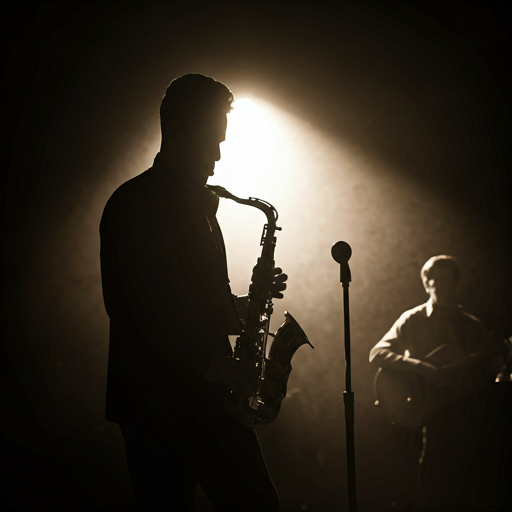
At the Valley Harvest Dance, Arnprior, 1963
"Her fiddle could make you laugh and cry in the same tune — that was her gift."
— Thomas Wright, Fellow Musician

Backstage at the Ottawa Folk Festival, 1968
Her performances were legendary not just for her technical brilliance, but for the deep emotional thread she wove through every tune. Whether she was driving a fiery reel or drawing out a slow lament, Sarah brought an undeniable authenticity to every note. Fellow musicians spoke of her generous spirit on stage, always lifting up the guitarists and bodhran players beside her while her fiddle carried the melody with effortless grace.
By the late 1960s, Sarah had become a fixture not just of the Valley scene, but of the broader Canadian folk community. Invitations to perform at festivals in Montreal, Winnipeg, and Cape Breton followed, and with each new stage she graced, her reputation grew. Yet she always returned to Ottawa — to the halls and the people who first danced to her tunes.
Off stage, Sarah was known for her warmth and dry wit. She could hold a kitchen party together for hours, trading stories between sets and coaxing even the shyest newcomers onto the floor. Friends recalled that she never turned down a request, no matter how obscure the tune — and if she didn’t know it, she’d learn it by the following week. That generosity made her not just a performer but the beating heart of a community that gathered around her music.

Backstage at the Ottawa Folk Festival, 1968
Her performances were legendary not just for her technical brilliance, but for the deep emotional thread she wove through every tune. Whether she was driving a fiery reel or drawing out a slow lament, Sarah brought an undeniable authenticity to every note. Fellow musicians spoke of her generous spirit on stage, always lifting up the guitarists and bodhran players beside her while her fiddle carried the melody with effortless grace.
By the late 1960s, Sarah had become a fixture not just of the Valley scene, but of the broader Canadian folk community. Invitations to perform at festivals in Montreal, Winnipeg, and Cape Breton followed, and with each new stage she graced, her reputation grew. Yet she always returned to Ottawa — to the halls and the people who first danced to her tunes.
Off stage, Sarah was known for her warmth and dry wit. She could hold a kitchen party together for hours, trading stories between sets and coaxing even the shyest newcomers onto the floor. Friends recalled that she never turned down a request, no matter how obscure the tune — and if she didn’t know it, she’d learn it by the following week. That generosity made her not just a performer but the beating heart of a community that gathered around her music.
With the Valley Players, Almonte, 1963
Recording at the CBC Studios, Ottawa, 1970
Teaching at the Valley Folk Camp, Renfrew, 1982